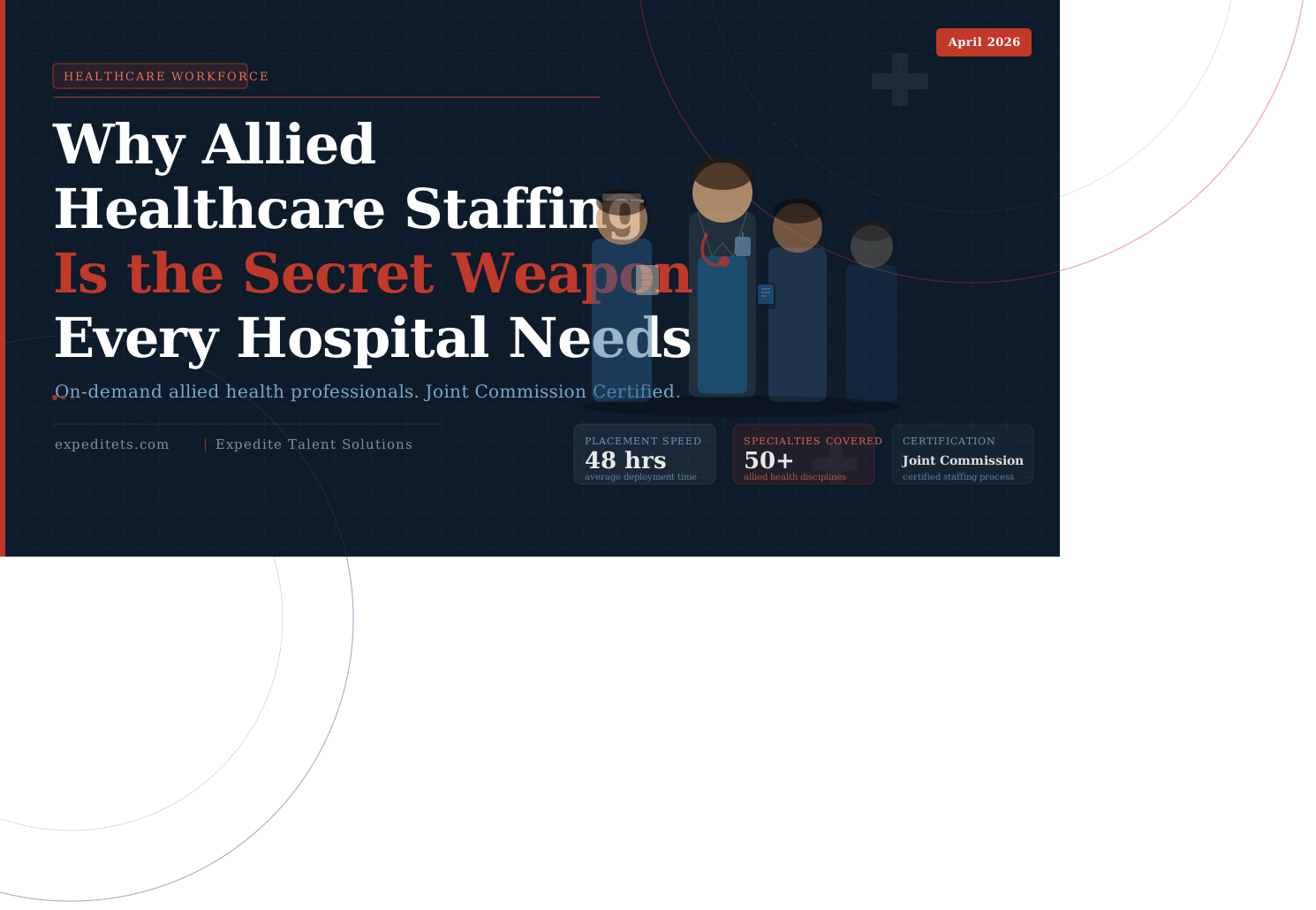


Expedite Talent Solutions is a Joint Commission Certified healthcare staffing firm with direct placement experience across hospitals, outpatient clinics, health systems, and specialty practices throughout the United States. The perspective shared here comes from years of placing administrative and support professionals into healthcare environments where the stakes of getting it wrong are genuinely high.
The Role Nobody Talks About Until It Goes Wrong
Clinical staff get the attention. Nursing shortages make headlines. Physician recruitment gets board-level focus. Administrative and support roles sit quietly in the background until something breaks.
A credentialing coordinator misses a provider licence renewal. A medical records team falls behind on release of information requests. A revenue cycle coordinator processes claims with the wrong payer codes. A scheduling team gets overwhelmed during a census surge and patients start falling through the cracks.
None of these are clinical failures. Every single one of them directly affects patient care, regulatory standing, and organisational performance.
The Real Operational Weight of Administrative Staff
Administrative and support professionals carry more of the operational weight of a healthcare organisation than most people acknowledge. Consider what they manage every single day:
- Provider credentialing and licence tracking — keeping clinical staff compliant and practice-ready
- Patient flow coordination — scheduling, intake, insurance verification, and pre-authorisation
- Revenue cycle operations — billing submissions, denial management, and payer follow-up
- Regulatory documentation — compliance records, audit trails, and accreditation preparation
- Health information management — medical records, release of information, and coding oversight
- Workforce coordination — onboarding, HR support, and internal communications infrastructure
Remove any one of these functions and the clinical operation behind it begins to struggle. Remove several at once through turnover, poor hiring, or chronic understaffing and the consequences spread fast.
Why Administrative Turnover Is More Expensive Than It Appears
Healthcare organisations often treat administrative turnover as a routine inconvenience. The data tells a different story. When an experienced medical records coordinator leaves, the institutional knowledge they carry leaves with them. When a credentialing coordinator turns over, provider files fall behind and compliance gaps open. When a scheduling team cycles through staff repeatedly, the patient experience degrades in ways that show up in satisfaction surveys and referral patterns.
The visible cost of replacing an administrative hire includes recruiter time, job advertising, and onboarding hours. The invisible cost lost institutional knowledge, temporary productivity drops, increased error rates, and the morale damage to surrounding team members is almost always larger.
This is why administrative and support staffing deserves the same strategic attention that healthcare organisations give to their clinical workforce. It is a direct part of what we address through our healthcare staffing solutions.
What Healthcare Administrative Staffing Actually Covers
Healthcare administrative staffing is not a single category. It spans a wide range of functions — each with its own knowledge requirements, regulatory context, and performance standards.
The Full Range of Administrative and Support Roles
Some of the most commonly placed administrative and support professionals in healthcare include:
- Healthcare executive assistants and office managers — supporting C-suite and senior clinical leadership
- Medical secretaries and patient intake coordinators — first point of contact for patients and families
- Health information management professionals — medical records, coding audits, and release of information
- Revenue cycle and billing coordinators — claims management, AR follow-up, and denial resolution
- Credentialing coordinators — provider licence tracking, primary source verification, and committee support
- Compliance and quality support staff — policy documentation, audit preparation, and regulatory tracking
- Healthcare HR coordinators — onboarding, benefits administration, and workforce pipeline support
- Supply chain and facilities coordinators inventory management, vendor coordination, and operational logistics
Every one of these roles requires a recruiter who understands not just the administrative function but the healthcare context it operates in. A credentialing coordinator who does not understand NCQA or Joint Commission credentialing standards is a liability. A compliance support professional who does not know HIPAA documentation requirements creates real regulatory risk.
Why Healthcare-Specific Knowledge Separates Good Placements From Great Ones
Placing an administrative professional in a healthcare setting is not the same as placing them in a corporate office. The regulatory environment is more complex. The documentation standards are more exacting. The consequences of errors are more significant. And the pace of operational demand particularly in acute care or high-volume outpatient settings is unforgiving.
Our recruiters specialise in healthcare administrative placement. They understand the difference between a general HR coordinator and one who has worked with Joint Commission survey preparation. They know what a revenue cycle coordinator needs to understand about payer contracts before they can add value on day one. This specialist knowledge is what makes our placements perform and stay. It is the same standard we bring to every service we offer, from non-clinical contract staffing to clinical and allied health placement.
Permanent Placement and Why It Matters More Than Most Organisations Realise
When a healthcare organisation fills an administrative role permanently, they are making a long-term investment. The quality of that investment depends entirely on the quality of the placement process behind it.
What Makes Permanent Administrative Placement Different
Permanent administrative placement is not simply a longer version of temporary staffing. It requires a fundamentally different approach because the stakes are different. A temporary candidate who is not quite right can be replaced at the end of an assignment. A permanent hire who is not quite right costs the organisation months of underperformance, a full replacement cycle, and the disruption of rebuilding team stability from scratch.
The right permanent administrative hire brings:
- Deep alignment with the organisation’s mission and operational culture
- The ability to grow into increased responsibility over time
- Long-term relationships with clinical teams, vendors, and payers that build operational efficiency
- Institutional knowledge that compounds in value the longer they stay
- Stability that allows the surrounding team to perform at a higher level
None of these qualities show up reliably in a standard interview process. They require a placement approach that evaluates candidates more thoroughly and a recruiter who understands what “good” looks like in a healthcare administrative context specifically.
The Passive Talent Pool That Most Organisations Never Reach
The best permanent administrative candidates in healthcare are rarely the ones actively browsing job boards. They are performing well in their current roles. They are respected within their organisations. They are open to the right opportunity but only if that opportunity genuinely offers something better than what they already have.
Reaching this passive talent pool requires a network built over years of operating exclusively within healthcare. Our recruiters maintain relationships with strong administrative professionals long before any specific role needs to be filled. That proactive network means our clients access a candidate pool that is broader and higher quality than what any job posting alone would generate.
Healthcare professionals who are actively exploring new opportunities can also connect with us directly through our job seekers page. We work with candidates as carefully as we work with clients because the quality of the match depends on both sides being genuinely well understood.
How We Find Administrative Candidates Who Will Stay and Grow
Retention begins at the point of selection. Every decision we make in our placement process is designed to maximise not just initial fit but long-term success.
Our Discovery Process Understanding Before Searching
Before we source a single candidate for an administrative role, we invest time in understanding the position at a level most recruiters skip:
- What does success in this role look like at six months and at two years?
- What has caused previous people in this role to leave or underperform?
- What is the specific EMR and operational system environment this person will work in?
- What is the leadership and communication style of the manager this person will report to?
- What growth pathways exist within the organisation for someone who excels in this role?
These questions shape everything that follows the sourcing channels we use, the screening criteria we apply, and the way we present the role to candidates. Organisations that want to think through their administrative workforce strategy in more depth before launching a search can also engage with our consultancy team for a more structured conversation first.
Screening for Healthcare Context Not Just Administrative Competence
Our screening process for permanent administrative candidates goes well beyond CV review. We evaluate:
- Healthcare domain knowledge — relevant to the specific role, whether credentialing, revenue cycle, HIM, or operations
- Regulatory awareness — HIPAA, Joint Commission, CMS, and payer-specific requirements as applicable
- System and platform familiarity — with the EMR and operational tools your facility uses
- Communication and interpersonal fit — assessed against the culture and leadership style of the specific team
- Long-term career alignment — ensuring the candidate sees a genuine future in this role and organisation
This level of screening takes more time. It produces permanent hires who stay and that difference in retention is where the real return on a rigorous placement process is earned.
Cultural Fit Is Not a Soft Criterion It Is a Retention Predictor
Healthcare organisations are not interchangeable. A large academic medical centre runs differently from a community health system. A faith-based network has different values and communication norms than a for-profit specialty group. A federally qualified health centre operates under different pressures than a private surgical practice.
Administrative and support staff who are deeply embedded in daily operations need to genuinely fit the culture they are working in not just tolerate it. When cultural fit is present, retention is higher, performance is stronger, and the surrounding team benefits from a more stable, collaborative environment.
When cultural fit is absent even if technical skills are strong it shows up within the first few months in friction, disengagement, and eventually departure. Our placement process treats cultural fit as a primary screening criterion, not an afterthought.
The Long-Term Value of Getting Administrative Staffing Right
The organisations that invest in high-quality permanent administrative placement consistently outperform those that treat it as a cost to minimise. The performance gap shows up in specific, measurable ways.
What Stable Administrative Teams Deliver
Healthcare organisations with stable, well-placed administrative workforces consistently show:
- Higher clean claim rates from billing and revenue cycle teams who know the systems deeply
- Fewer compliance findings from credentialing and quality staff who stay current and proactive
- Better patient satisfaction scores from intake and scheduling teams who provide consistent, professional experiences
- Lower clinical staff turnover because well-run administrative support reduces frustration and operational friction for clinical teams
- Faster accreditation and survey preparation from compliance staff who have built institutional knowledge over time
These outcomes do not happen by accident. They are the downstream result of administrative placement decisions made with care, sector knowledge, and a genuine understanding of what long-term success looks like in a healthcare environment.
Administrative Excellence Enables Clinical Excellence
The most direct argument for investing in administrative staffing quality is the simplest one. When your administrative and support functions run smoothly, your clinical staff can focus entirely on patient care. When they do not, clinical staff absorb the friction and patient care suffers.
Every credentialing delay that a skilled coordinator prevents keeps a provider on the floor. Every clean billing submission that an experienced revenue cycle coordinator produces keeps the organisation’s cash flow healthy. Every patient who receives a seamless intake experience is more likely to return and more likely to refer.
Administrative excellence is not separate from clinical excellence. It is what makes clinical excellence operationally sustainable. This interconnection is why we build our administrative staffing approach as an integrated part of our broader healthcare workforce solutions not as a standalone service.
What to Look for in a Healthcare Administrative Staffing Partner
Not every staffing firm is equipped to serve healthcare administrative hiring needs well. The right partner brings a combination of sector knowledge, candidate network depth, and placement rigour that generic staffing firms simply cannot replicate.
Questions Worth Asking Any Staffing Firm You Consider
Before you engage a staffing partner for permanent administrative placement, ask:
- Do your recruiters specialise in healthcare, or do they cover multiple industries?
- How do you screen candidates for healthcare-specific regulatory knowledge?
- What is your process for assessing cultural fit not just technical skills?
- Do you have an existing network of passive healthcare administrative candidates?
- How do you support the placement after the candidate starts, and for how long?
The answers to these questions will tell you quickly whether you are talking to a healthcare specialist or a generalist firm with a healthcare practice bolted on. The difference in placement quality between the two is significant and it compounds over time.
What Expedite Talent Solutions Brings to Every Administrative Placement
Our administrative staffing team works exclusively within healthcare. Our credentialing process aligns with Joint Commission Certification standards. Our candidate network spans the full range of administrative and support disciplines across the healthcare sector.
We do not simply match job titles to resumes. We understand the operational context of every role we fill, the culture of every organisation we serve, and the career trajectory of every candidate we place. That depth of understanding built through years of exclusive focus on healthcare workforce placement is what makes our permanent placements perform and stay.
To learn more about our approach and the values that shape how we work, visit our about page. If you are ready to talk about a specific administrative staffing need, contact our team directly and we will start with a genuine conversation about your organisation not a sales pitch.